
Book Review: Burn Down Master’s House
Here’s my review of Burn Down Master’s House by Clay Cane. Leave a comment if you’ve read it, plan to read it, or have book recs to share. Then keep scrolling to see today’s writing prompt.

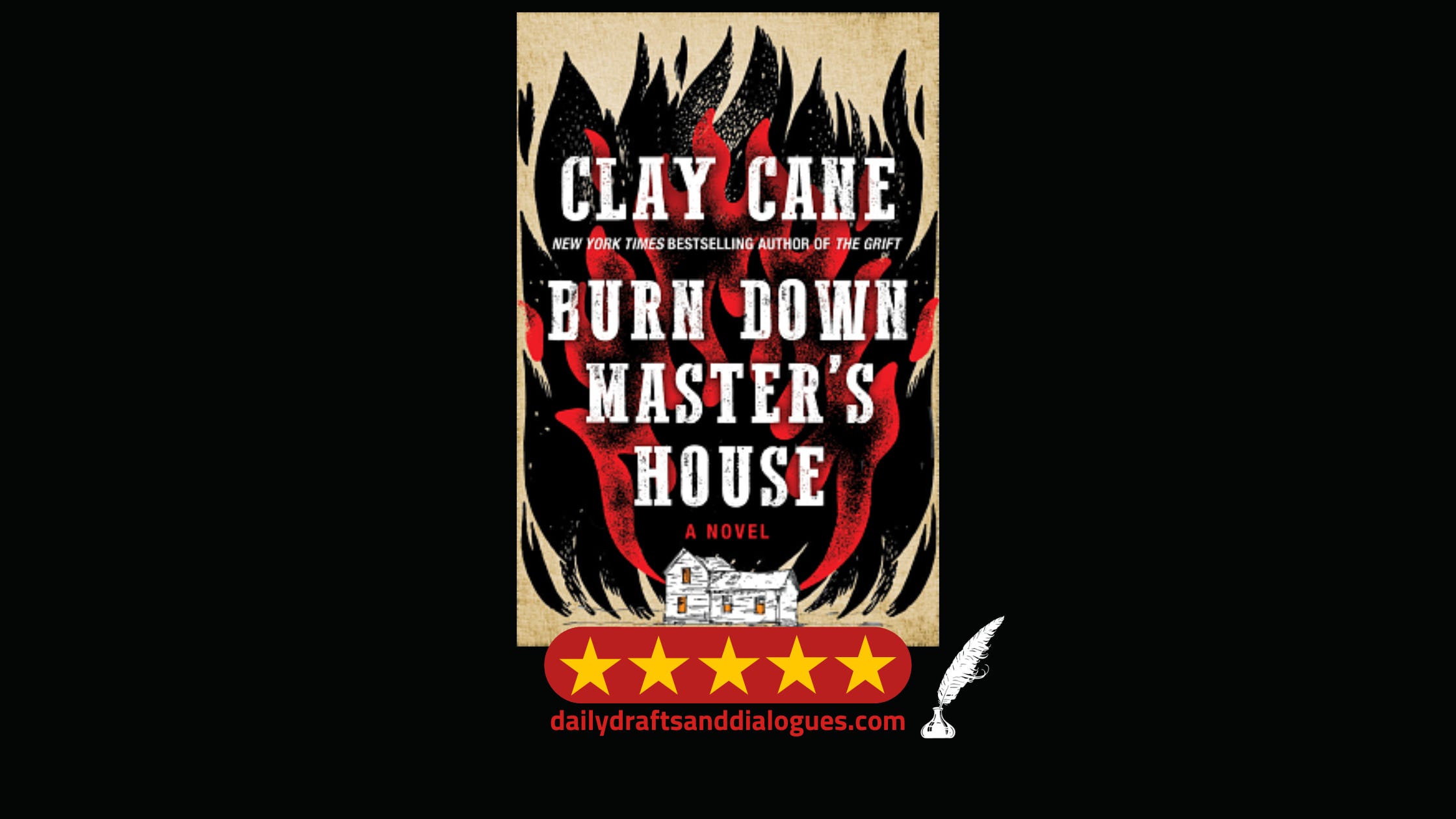
Burn Down Master’s House by Clay Cane is one of those books I’ll never forget, with its vivid characters who are based on real people who resisted and opposed chattel slavery and inspired others to fight against a system that was built on the subjugation of Black and Brown bodies. It will make you feel uncomfortable, very uncomfortable. It might even make you mad. And it will certainly make you sad. But hopefully, so does the mere concept of chattel slavery, as well as the centuries of horror it unleashed, and continues to unleash.
The novel opens with an act of resistance, when Henri refuses to have sex with Suzie to make more slaves for their master, who ends up selling him to another plantation with a reputation for being brutal as a result. At that plantation, he meets and falls in love with Luke, another slave who works in the main house and is chained to his master’s bed at night. Their relationship is also an act of resistance, kindling what happens once they forge their unshakable bond. Henri’s fiery soul, joined by Luke’s and others on the plantation, ignites one unforgettable night of resistance, as well as a series of events and stories that take place in the remainder of the book. The unforgettable acts of resistance from that fateful night are shocking and hit hard but will also encourage readers to ask themselves honest questions about what real resistance would have looked like on plantations, given such horrific conditions and systematic oppression. And what real resistance could and should look like in today’s world.
The interconnected stories in the novel reveal not only how deeply entrenched the institution of slavery was in everyday Southern life, as it was upheld by legal, political, social, economic, and religious institutions, but how deeply entrenched its opposition was— though mainstream history does not like to discuss that much, especially when it isn’t pretty or simple to read about, or perceived on the surface as being justifiable, and is written by those historically seen as less than.
But tell me, if a group of people was systematically killing your family and friends, and it was only a matter of time before you were next, what would you do to resist it? What lengths would you go to, need to go through, for freedom of your body, real-world justice, and survival for yourself and them? Especially if you lived in a world that perceived you as property, expendable, and less than human— where you literally had nothing left to lose, including your life?
I must admit, as I read this novel, I struggled with accepting any form of violence, especially murder without remorse, as being justifiable. But then, the closer I got to these characters and their stories, the more I came to realize and appreciate the ins and outs and nuances of their plight and fight, which led me to ask myself: should anyone truly feel bad about killing a devil? Because the institution of slavery is surely some sort of devil’s work, and those who uphold it and tolerate it and or profit from it, even relish in its evils, are devils that should burn, plain and simple.
Above all, I appreciated how this novel honored the memory of the people its characters were based on, and how each character’s fire, their souls, were what was celebrated in the end, and not their suffering or struggles. Yes, they were physically, psychologically, and emotionally tortured, and endured horrors no human being should ever have to know about let alone experience, and we absolutely need to remember that, but the horrors they endured should never outweigh the resistance they ignited and continue to ignite, or their souls’ plight.
I would recommend this novel to those who understand and appreciate the power of this passage from the book:
“The presidents, prime ministers, oligarchs, demagogues, and an alliance of dictators will thrive by turning neighbor against neighbor to deflect their own sins. But the spark has been lit and there will be dissenters who refuse to bow. No more apologies while wishing for retribution. No more waiting for allies or accomplices. No more mercy; the demise of those who oppress won’t be accidental, it will be intentional. We will answer with fire.”
Subscribe to receive future book reviews in your inbox, along with other engaging posts. And don’t forget to leave a comment with your own book recommendations.
© This work is not available for artificial intelligence (AI) training. All Rights Reserved by K.E. Creighton; Creighton’s Compositions LLC.
Want to express your appreciation for this post and writing prompt?
My writing and I are fueled by loyal readers, caffeine, and kind words, so I appreciate any support you can offer that keeps me writing. Thank you so much!
Today’s Writing Prompt
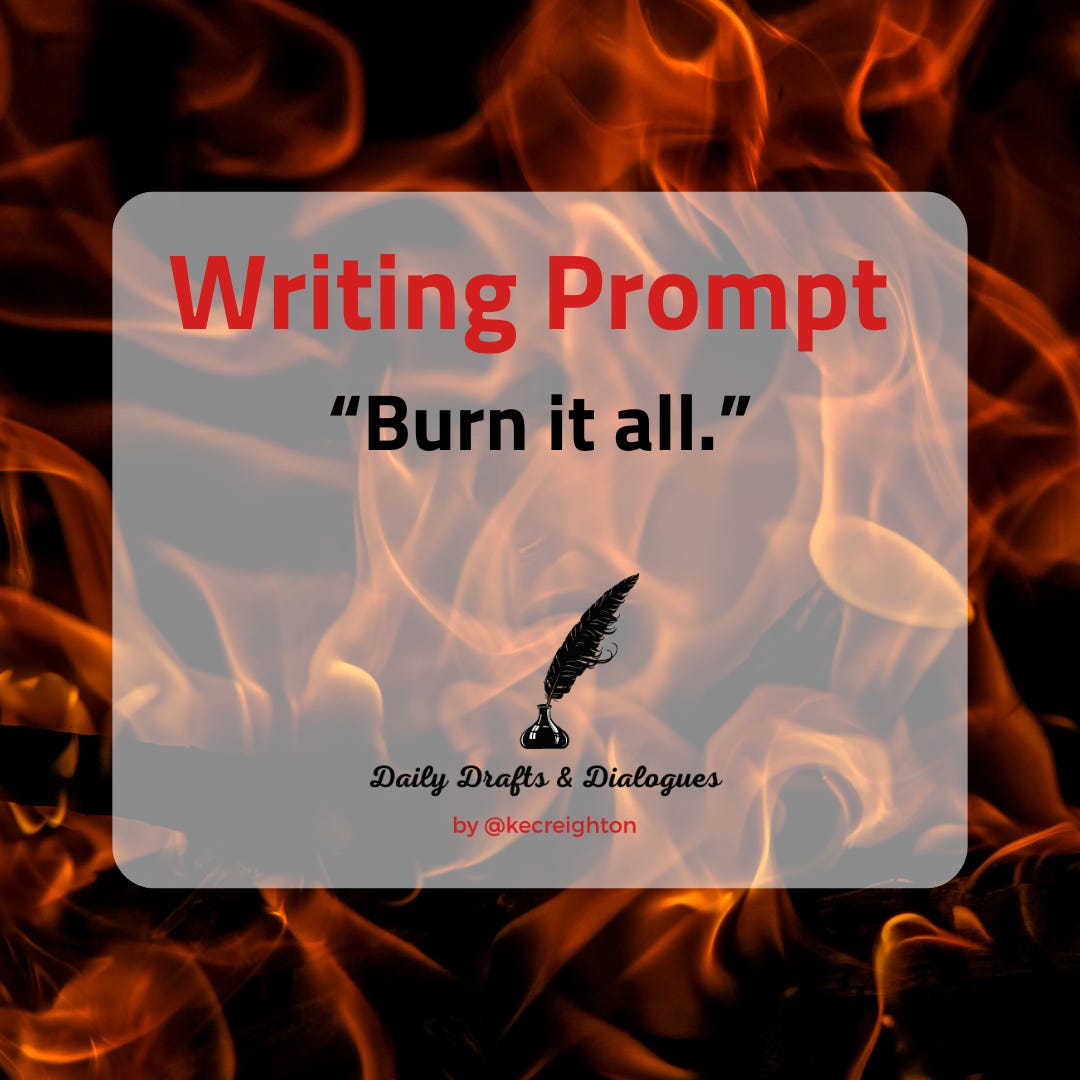
Writing Prompt: “Burn it all.”
Write a piece of flash fiction in which one character says,”Burn it all.” Or write about a time you wished you would have or could have said this to someone else.


