
Book Review: People Like Us
Here’s my review of People Like Us by Jason Mott. Leave a comment if you’ve read it, plan to read it, or have any book recs to share. And don’t miss today’s writing prompt.

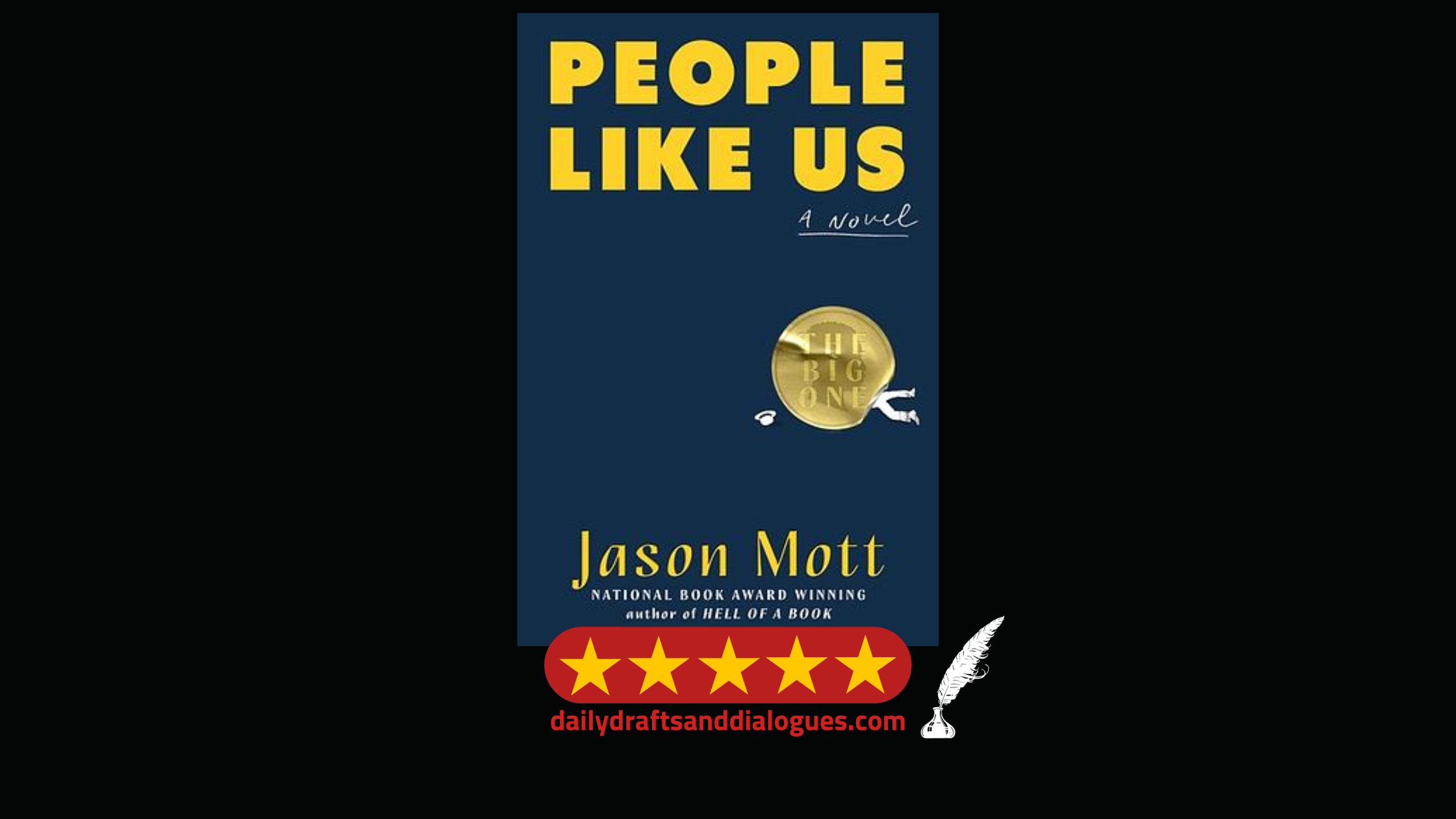
People Like Us by Jason Mott is a book that blurs the lines between nonfiction and fiction but isn’t quite autofiction. It’s a bittersweet novel that will leave you reflecting on serious things like race, gun violence, family, and belonging, while making you laugh out loud somehow. It’s also suspenseful and will keep you turning pages. So, in many ways, it’s difficult to classify, which is a testament to the arranger of its content.
Over the course of the book, we follow two protagonists who cope with the trauma of gun violence in various parts of the globe alongside authorship as a Black man. And their narratives mirror each other in a lot of ways, though one is told in the first person and the other is told in the third person, allowing the novel to remain deep and introspective albeit from a ‘safe’ emotional distance for most readers to unpack heavy topics.
Throughout the book we are constantly confronted with the phrases ‘people like you’ and ‘people like us,’ often left wondering what is specifically meant by them as the protagonists try to understand their own identities and sense of belonging in the world, which likely reflects their experience as Black men in the world who are exploring their specific versions of Black diaspora. When the phrases are used, they are usually open-ended and could refer to and indicate a variety of identities with which the protagonists could choose to identify: Black people, Black men, Black authors, award-winning authors, authors, creative people, Americans, people searching for belonging in the world, and or people coping with gun violence, readers, people with ‘hyperempathy,’ etc. And this often leaves it up to the reader to decide which identity or trope to place the protagonists in, which is a smart and emotionally profound way to explore identity in a novel.
One protagonist talks like a man from a 1940s noir film, which is amusing, sure, but also forces readers to reckon with his identity head-on, especially since he is constantly mistaken for someone else during his travels. Readers might wonder: Is he the hero or anti-hero of the tale? And what is going to end up happening with the gun he acquired to defend himself from a ghost (or ghosts) that won’t leave him alone, as well as what they represent? And what decisions about his future will he make, especially when offered all the money and ‘safety’ in the world? And who exactly is this ‘sister’ he is telling his story to? Etc.
Meanwhile, the other protagonist wants, or tries to use, a book as a weapon (as illustrated in reimaginings of when he is pulled over by police), yet is still ultimately unable to escape the realities and memories of gun violence (and other systemic violence) in America, his literal ties to his family’s land and the memory of his family, similar(ish) to the other protagonist. But, readers might wonder: Who is telling his story, which is written in the third person? Is his story the other protagonist’s story? If so, in what ways? Or is his story being told by us as we read it? Etc.
Overall, what makes this novel such a literary feat is the liminal space it creates and offers, which still feels tangible somehow, though always just out of reach. Maybe we’ll never have concrete answers to a lot of the questions we’ll ask about its plot and characters and author as we read it. But that’s precisely how it ends up answering most, if not all, of those questions— though in dreamlike, imaginary, surreal, incomplete ways that still need to be read and written about. And that is how this novel unearths the real power of storytelling.
I recommend this book to readers who enjoy reading between the lines as much as they enjoy reading the literal lines they read. I do believe it will appeal to a broad audience, and I mean that in the best way possible, as its potential popular appeal will be what somehow accentuates its literary prowess.
Here are some notable passages from the book:
“...sometimes imagination is the only weapon and the only salvation we have in this world.” (p.35)
“The language of the dead is only ever smoke and puffs of wind and, sometimes, a plot of land off in the distance, unseeable in the darkened night, but always there, beckoning us to stay or come back to it, depending on where we are in time at the moment when the evening breeze blows just so.” (p.89)
“It doesn’t take very long before the dead kids show up in the stacks of paper. The dead are always present in writing. Death and love are the oldest tropes for a reason.” (p.106)
“They want to know how much of what they were told is real and how much imagined— which is a way of saying they want to know how much of the world in the book is the world in which they live because, if they can know that, they can understand the things they see on the news each day a little better. People want the book to explain the world, and they want the world to explain the book.” (p.139)
“... because that’s what a good storyteller does: they keep the best parts of a story just over the horizon, because any yarn-spinner worth their salt knows that it ain’t the sunrise but the split second before the sunrise that we really want to hold on to. That’s the moment we keep coming back for because it’s a moment where we can imagine anything and everything being possible when that sun finally does come crack up the horizon into that dazzle of colors.” (p.231)
Subscribe to receive future book reviews in your inbox, along with other engaging posts. And don’t forget to leave a comment with your own book recommendations.
© This work is not available for artificial intelligence (AI) training. All Rights Reserved by K.E. Creighton; Creighton’s Compositions LLC.
Want to express your appreciation for this post and writing prompt?
My writing and I are fueled by loyal readers, caffeine, and kind words, so I appreciate any support you can offer that keeps me writing. Thank you so much!
Today’s Writing Prompt
Writing Prompt: The Award
Write a piece of flash fiction in which someone receives an award or is looking at an award. Or write a journal entry about a time you received an award or accolade of some kind.
Writing Tip
Before you begin writing, consider: Who is receiving the award? For what? Why now? By whom? And how does the recipient really feel about the award?


