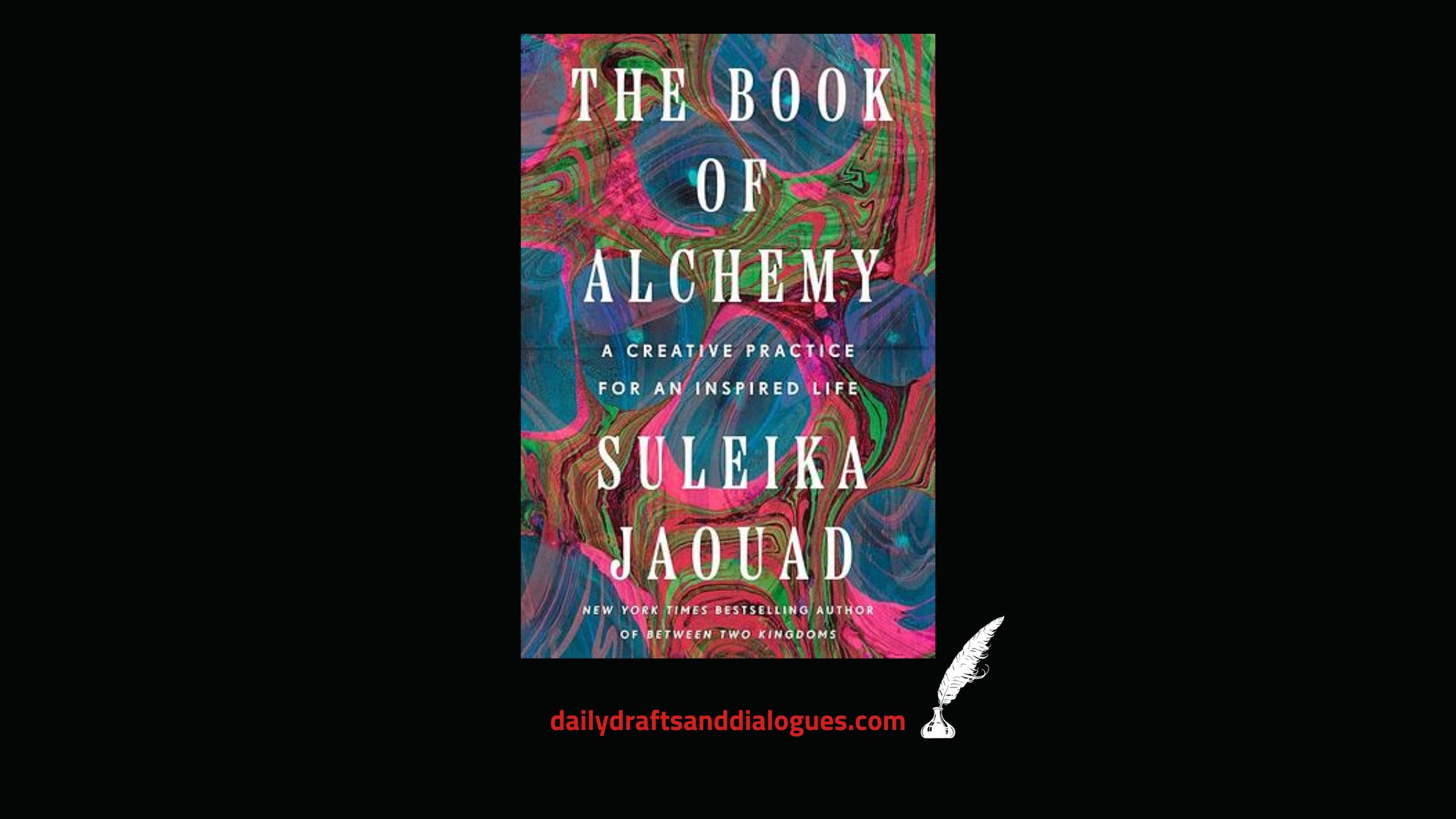
Notes on The Book of Alchemy
Here’s my first post about the Egalitarian Book Club’s January pick, The Book of Alchemy by Suleika Jaouad. Leave a comment if you’re reading it too, or if you're curious about it.
The Book of Alchemy: A Creative Practice for an Inspired Life by Suleika Jaouad is so similar to what I have tried to do with Daily Drafts & Dialogues over the years that it’s eerie. And for better or worse, it’s allowed me to see how starved for genuine inspiration I have been, and how necessary and valuable it is to stay inspired every day, as well as how critical writing and reading is to accomplishing that.
If you’re enjoying this book so far (it’s the Egalitarian Book Club’s January selection), I’d love to discuss what you’re enjoying most about it. Originally, I was thinking we would read two chapters per week, over the course of the month, but now I’m seeing the benefit of reading only one or two entries per day. According to the introduction, the book includes 100 entries, each with its own writing prompt. And so far, I have found them very inspiring.
Like this book, I have always wanted Daily Drafts & Dialogues to offer daily inspiration, and or a space for reflection, for writers and readers and humans from a variety of backgrounds. Unlike this book, however, I also like to include more creative pieces of writing for daily inspiration. While daily journaling is invaluable, despite it being widely seen as something only elderly housewives or children should do, I believe there is also significant value in writing creative fiction, poetry, letters, etc. And I’m confident Jaouad would agree.
As the book affirms, journaling offers us a chance to reflect and express ourselves in uninhibited forms, especially if we decide to do it daily. But sometimes those forms look like images or poems or come out in fragmented sentences or jumbled lists or song lyrics. Again, I’m confident Jaouad would agree that this is still valuable and beautiful. Which is why I am enjoying this book so much— it’s allowing me to see how I and others are continuing to write and create in various ways that add so much to the conversations happening in the world. And in this way, The Book of Alchemy has made me feel truly seen and understood as a writer (which doesn’t happen very often), and as a person who wants to remain creative and inspired, at least most days if not every day.
While reading this book, I have reaffirmed the belief that when we put our egos aside as writers and readers, we’ll find comfort in allowing ourselves to truly open our minds and hearts up to the world writers have created. A beautifully frustrating and complex world of words we’re lucky enough to live in and contribute to ourselves. Especially when we’re vulnerable and patient with each other and ourselves.
Now whenever I doubt whether another soul will ever care about my daily words, I will remind myself of all the times I have felt seen and comforted by writers who share the words they may find mundane and insignificant with me anyway, and what an unassuming gift that is.
Our creative egos and insecurities tell us we need to be the best writer of all time, write only profound and life-altering sentences, and make sure we stand out from other writers, especially the ones we intentionally or unintentionally model our works after … but often forget that the writing that truly resonates will always remind us how we use the same human language to understand and express ourselves, even if it’s all in translation. Because the writing that truly resonates, that stands the test of time, long after we’re gone, will always be the writing that connects us.
I’m so glad this is one of the first books I picked up this year. 2025 was a challenging year, emotionally and practically speaking, for so many people around the world. Yet this book offers us a roadmap to how we can get back to ourselves, what matters to us, and who we want to be in this world in the year ahead: We write our way through.
If we want to reconnect with ourselves, our values, and passions, while reconnecting ourselves to the broader world and all the people in it, we need to write about it all— the mundane, as well as the divine, as they are two sides of the same coin.
Sometimes what we write won’t seem all that profound, and other times maybe it will. But who are we to judge?
Have you started reading The Book of Alchemy yet? If so, what are your thoughts so far?
P. S. Join our Buddy Read in Storygraph at any time, or feel free to leave a comment or chat thread in Substack to discuss the book.
© This work is not available for artificial intelligence (AI) training. All Rights Reserved by K.E. Creighton; Creighton’s Compositions LLC.
Want to express your appreciation for this post?
My writing and I are fueled by loyal readers, caffeine, and kind words, so I appreciate any support you can offer that keeps me writing. Thank you so much!


