
Book Review: Seasons of Glass and Iron
Here’s my review of Seasons of Glass and Iron by Amal El-Mohtar. Leave a comment if you’ve read it or want to discuss it. And don’t miss today’s writing prompt, or the dialogue in Community Notes!

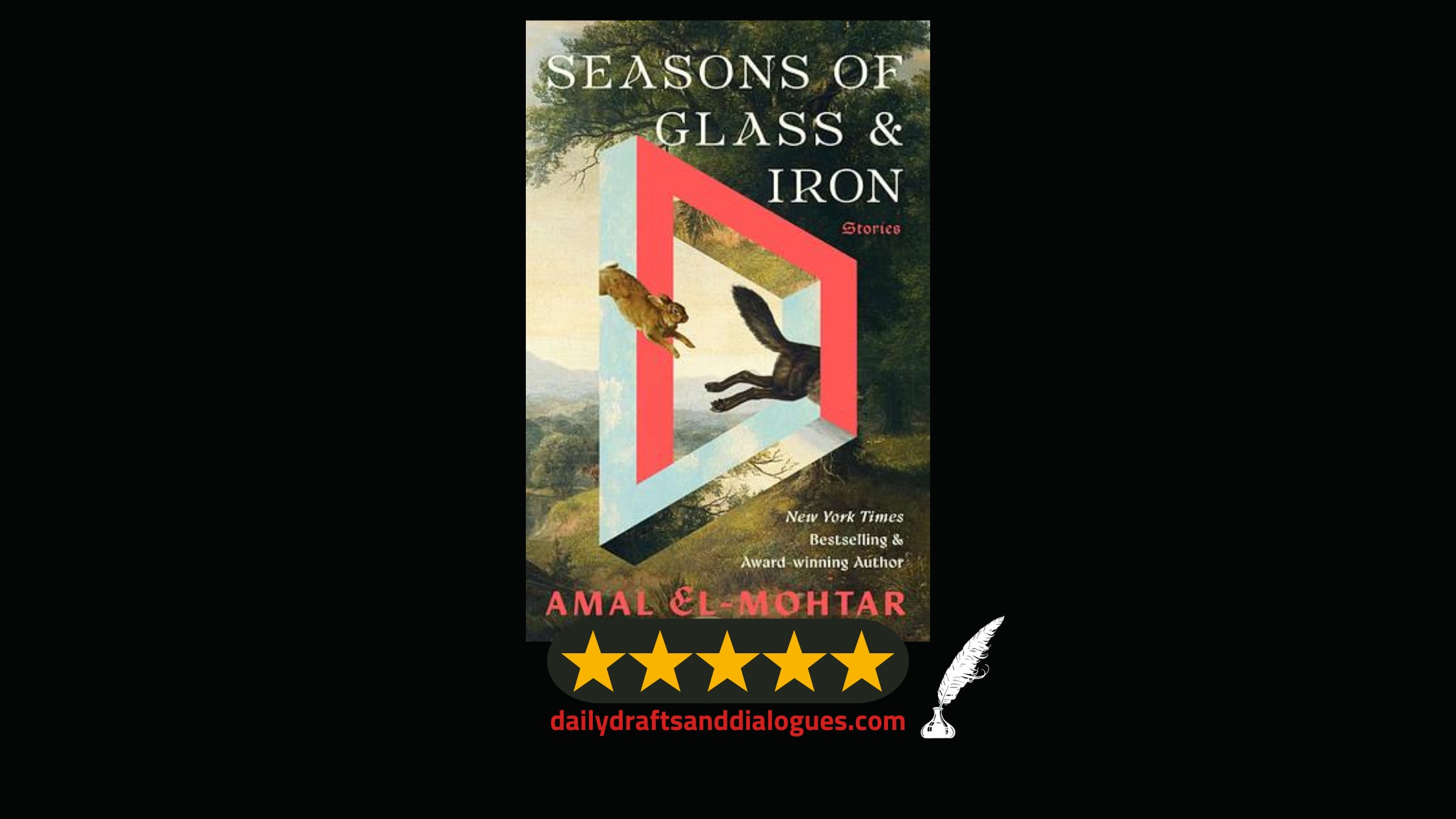
Seasons of Glass and Iron by Amal El-Mohtar is a short story collection that is easy to savor, as each of its tales are imbued with a thread of magical storytelling that will transport you to unusual and beautiful places you never knew you wanted to visit before reading them. Yet they each carry bittersweet, and all too realistic, parables women and displaced people will be able to understand in their bones. Truthfully, it’s been some time since I’ve read stories so hauntingly tragic yet deeply heartening as these.
While each tale in this collection contains magical elements and hints of magical realism, one would be remiss if they didn’t also mention how those literary elements and techniques work to subvert traditional folklore and science fiction storytelling traditions, which are usually saturated with overtly masculine preoccupations of conquests, especially conquests of women. At their core, these stories rely on their magical elements and lyrical prose to highlight relationships between women who share, heal, communicate, and rebuild in the wake of or despite hardship and being pursued by those who attempt to conquer them. So, if you’ve been seeking fairytales where the women save themselves by being the authentic women they always were— magical, strong, kind, smart, resourceful, etc.— as they support one another, then you will want to read this collection.
Each story in this collection is full of metaphors and metaphoric language, just as traditional fairytales and storytelling are. In Seasons of Glass and Iron, the namesake of the collection, the seven pairs of iron shoes Tabitha must wear down to free her husband represent the heavy burdens, emotional labor, and continuous pain women are conditioned to endure to maintain their relationships with men, namely marriages. These iron shoes contrast with those magical shoes often given to male characters in folklore that lighten their steps and make exploration easy (winged sandals, satin slippers that cloak one in invisibility, etc.). The apples Tabitha eats in the story also contrast with those apples in traditional stories like The Garden of Eden, where Eve eats the apple at a great cost for all humanity, and in Snow White, where the apple puts Snow White into a deep death-like sleep. Instead of being a source of downfall, in this story, however, sharing and eating apples becomes an act of communion, shared knowledge, and queer intimacy between Tabitha and Amira.
Stories like Florilegia; or, Some Lies About Flowers use the creation of a woman out of flora to interrogate how society artificially constructs women to fulfill patriarchal duties and desires. In A Tale of Ash in Seven Birds, the clashes between birds and the wizard-nation function as a metaphor for the devastation of empires and the resilience of marginalized peoples fighting to protect their culture, memories, and voices. The magical birds clashing in battle and transforming over time serve as a metaphor for diaspora, colonialism, the trauma of forced migration, and represent the struggle to find a new homeland and navigate how the world absorbs or rejects refugees. And in Green Book, the spirit of a woman trapped inside a text is a metaphor for how society and men often try to ‘own’ women through storytelling, treating them like objects to be read and possessed rather than complex human beings to be engaged with or understood.
Minerals, glass, stones, and various inanimate objects are also used in many of the stories to symbolize pathological obsession, unrequited love, and women’s sanity, often highlighting the dangerous, intoxicating pull of the unknown and how women’s internal desires are often pathologized by external structures and the male perspective or male gaze. Music also serves as a profound symbol of communication, healing, and survival, representing the liberating, connective magic of women’s voices in a world structured to isolate and oppress them and functions as a vehicle for expressing longing, melancholy, and restless passion, allowing characters to raise their voices in song to reclaim their agency. And across the collection, language and sound are depicted as active magic, appearing in mystical ways. Singing, writing, or speaking is never just passive entertainment in this collection as it actively reshapes the characters’ realities and allows them to connect over borders both real and imagined.
Open communication and love between women are also central to each story in this collection. The collection centers on the power of women connecting with one another, exploring how women, who are often trapped by societal expectations or patriarchal fairytale curses, find solace, understanding, and liberation through friendship and queer partnership. In The Truth About Owls an immigrant girl navigating a new country finds solace and a deep bond with the caretaker of an owl, demonstrating how women provide maternal and sisterly comfort across generations and distances. In Madeleine, a young woman grieving her mother’s death from Alzheimer’s disease, who is also participating in an experimental drug trial, experiences intense flashbacks and visions in which she discovers a deep, dreamlike friendship with another woman. And in A Hollow Play, a girl named Emily navigates the pain of losing her best friend, Paige, by finding a surprising sense of community among a group of magical creative creatures from another realm who present themselves as women and are dealing with their own yearning for a lost home.
Overall, I would recommend this collection to readers who enjoy getting lost in lyrical prose and women-centered stories. I would also recommend it to those readers who enjoy unpacking literary devices and deeper meaning from what they read.
Here are some notable passages from the book:
“A witch is a kind of justice in the world. It makes for a fine story. No one wants to admit the truth, for all it stares them plainly in the face.”
“Steal from a woman long enough, and a witch is what she’ll become.”
“Wizards—their power lies in naming. They shape reality because they tell a good story. Tell a different one—one of your choosing, one of your desire—and teach it to the world until it learns your truth and makes room for it.”
Have you read this book yet, or plan to read it soon? Leave a comment to start a discussion. Or tell us what we should read and review next!
And don’t forget to subscribe to receive future book reviews in your inbox, along with other engaging posts.
© This work is not available for artificial intelligence (AI) training. All Rights Reserved by K.E. Creighton; Creighton’s Compositions LLC.
Want to express your appreciation for this post?
Daily Drafts & Dialogues is fueled by loyal readers, caffeine, and shares with kind words, so any support you can offer to keep it and me going is greatly appreciated. Sincerely, thank you so much! — K.E. Creighton
Community Notes (New!)
💬Weekend Dialogue💬
Do you prefer reading lyrical prose or more literal prose? Poetic writing or action-packed writing? Shakespeare or Hemingway?
Remember: Your thoughtful comment on this post could be featured with a link to your profile and byline in the new Daily Drafts & Dialogues Community Spotlight section (below) in a future post. I’m looking forward to keeping this conversation going!
In this new section of Daily Drafts & Dialogues, you will see additional notes on posts and what’s going on in the broader Daily Drafts & Dialogues community, more in depth questions to spur further dialogue, polls, discounts, contest opportunities, helpful links and resources, and opportunities to have your comments and work featured in the new Community Spotlight section below in future posts.
Community Spotlight
This new section will FEATURE YOUR WORK AND VOICES. Leave a thoughtful comment on a Daily Drafts & Dialogues post for a chance to have your writing, links, and profile featured here.
Daily Drafters Features and Exclusives
PAID SUBSCRIBERS: Check the chat for daily writing prompts, tips, inspiration, feedback, dialogues, and other exclusive content. And get your work and byline featured here in a future post!
TODAY: There’s still time to join this week’s Community Chat Thread, where you can share your responses to this week’s writing prompts or anything else you worked on this past week that you’d like to discuss or receive feedback on!
Egalitarian Book Club

Currently Reading: Westward Women by Alice Martin (Join the buddy read here.)
Recommended Reading Schedule:
Week 1 (May 1-10) — Chap. 1-7 (Part I)
Week 2 (May 11- 17) — Chap. 8-14 (Part II- III)
Week 3 (May 18- 24) — Chap. 15-21 (Part III- IV)
Week 4 (May 25- 31) — Part V, remaining chapters
June Pick:

Votes are in! We’ll be reading Yesteryear by Caro Claire Burke in June.
Join the buddy read here. And stay tuned for a recommended reading schedule.


