
Book Review: Westward Women
Here’s my review of Westward Women by Alice Martin. Leave a comment if you’ve read it, plan to read it, or have any book recs to share. And don’t miss today’s writing prompt.

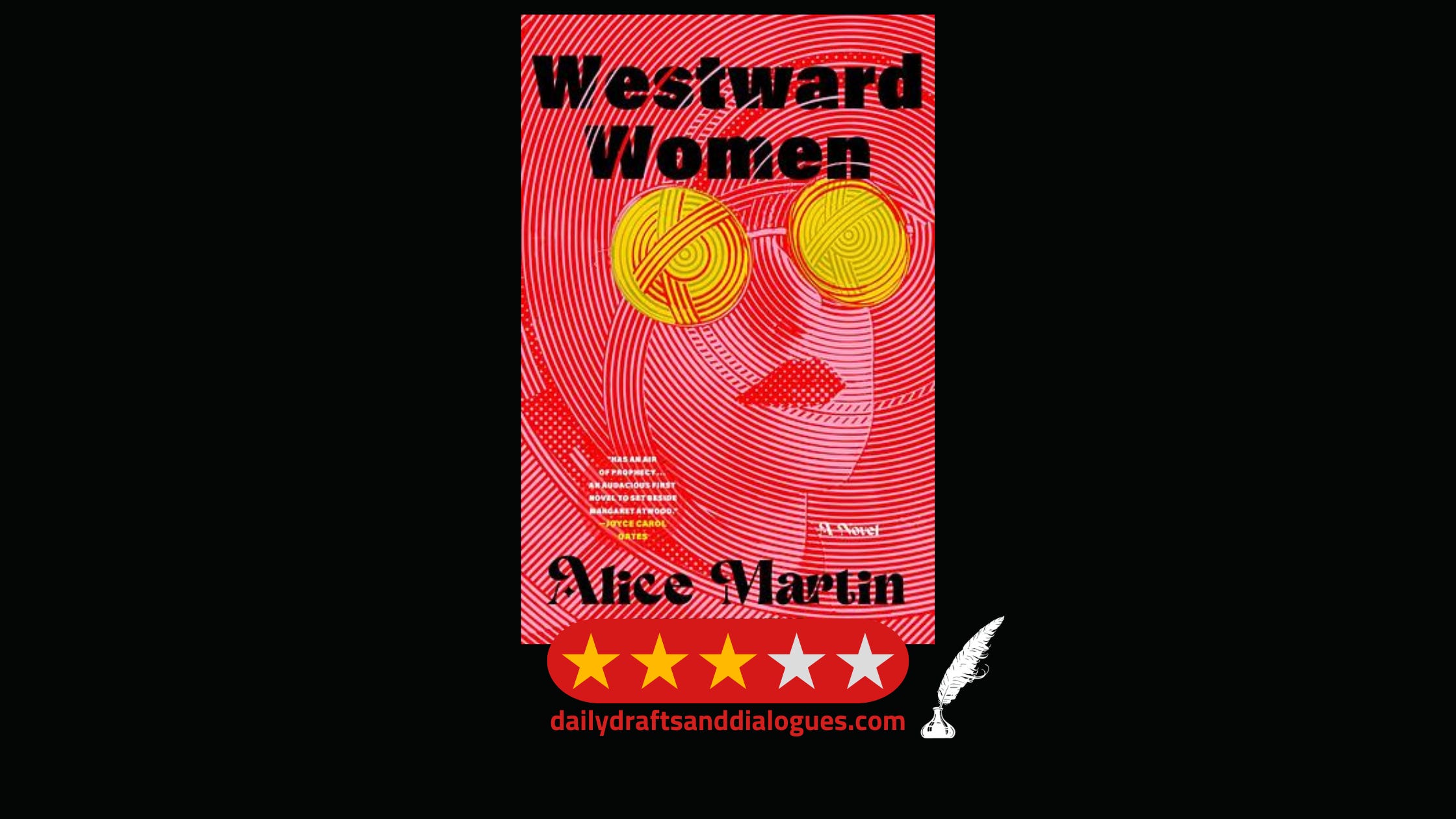
Westward Women by Alice Martin is a novel with both obvious and hidden layers worth exploring and is as mysterious as it is enlightening in many aspects. I would recommend it to historical fiction readers (especially those who enjoy reading fiction based in the US during the tail end of the hippie era), and readers who enjoy unraveling slow-burn mysteries centered around the precarious plight of women.
The novel follows three main characters as they move westward.
Aimee, a recent college graduate, heads west to find her missing best friend, Ginny, who went missing after falling victim to a nationwide ‘itch’ only women ages 18-35 are able to catch. As she follows leads for Ginny’s whereabouts, she learns more about the mysterious itch that is inflicting so many women and begins experiencing visceral dreams and visions of women who have caught the itch pulling them west in the past, while unpacking her memories of Ginny and Ginny’s influence on her. These memories, dreams, and visions propel Aimee in the direction of an ominous figure everyone calls The Piper, a man who lures young women onto his bus by promising them that he will help them get to the Pacific Ocean, as far west as they can get.
Meanwhile, Eve, a journalist who is desperate to get her career back on track, also chases down leads for The Piper and his whereabouts, hoping to write about him and the ‘westward women’ he is corralling onto his bus. During her journey, Eve encounters a westward woman who coincidently managed to get out of The Piper’s clutches, and they end up traveling together to find him. And as they move westward together, they learn more about the itch, themselves, and develop a strong pull toward each other, as readers learn more about their backgrounds and personal histories.
Teenie, a young woman who is on The Piper’s bus, is the novel’s third main character. From her first-person perspective (the only first-person perspective in the novel), readers will see the manipulation of The Piper firsthand— how he uses the women’s itchy vulnerabilities against them, and how he lies to them, endangers them, and harms them, while pitting them against one another. Her perspective allows readers to try and understand what leads these westward women to board his bus, even while he exploits them and manipulates them. It also gives readers insight into why these women think they’re sick, or what leads to their supposed sickness, as well as their tragic fates.
At the end of the novel, the three main narratives crash into one another (arguably, literally) in some expected ways, as there are plenty of breadcrumbs throughout the novel indicating their connections. In some ways, this was refreshing. In other ways, it partially minimized the unique perspective each character was maintaining throughout the novel and came across as rushed and a little too convenient, I am sorry to say. At times, it seemed like following only one of the main character’s narratives throughout the novel would have had a greater, more nuanced impact, as there only ended up being one central storyline in the end. But I’m glad to say that other readers probably won’t agree with this opinion of mine.
I also found how each woman is ‘cured’ of her itch, or learns to live with her itch, at the end of the novel, a little underwhelming, and likely wouldn’t have felt that way had the mystical-leaning elements throughout the novel never been introduced. If the women were meant to be mystically linked by what made them ‘itch,’ then I would have been more interested in reading about those mystical links as if they really were surreal and magical. But if the westward women were simply exploring the exciting yet confusing combination of drugs, free love, partial liberation, along with the new wave of societal challenges linked to cults, serial killers, and the women’s liberation movement of the 60s and 70s, then I don’t see why the dreams were introduced as a mystical-leaning element, other than to offer some sort of avenue for Aimee to receive her clues to follow The Piper, which easily could have been offered in more realistic ways. Basically, I think there should have been stronger elements of magical realism or no hints of it at all. However, I can understand if other readers don’t agree with this opinion.
Overall, I felt like too much emphasis was placed on the women in the novel believing they were sick in the first place, and that not enough emphasis was placed on their individual strengths and natural powers of discernment regarding how the mechanisms of patriarchy were working to manipulate and gaslight them— comparatively. Sure, some women fall victim to patriarchal machinations every day, but many others also subvert them and upend them, though that was not present in this novel. Even Eve’s character (the most discerning of the three) succumbed to some of the worst aspects of the supposed itch (arguably inflamed by patriarchal norms) at the very end of the novel. I understand that the far-reaching, pervasive clutches of patriarchy were a major driver, if not the main driver, of the plot of this novel, but I didn’t like how the novel ultimately made me feel more alone and like I should perceive women as weak victims who don’t know their own minds and desires or find it extraordinarily difficult and burdensome to know their own minds and desires.
Have you read this book yet, or plan to read it soon? Leave a comment to start a discussion. Or tell us what we should read and review next!
And don’t forget to subscribe to receive future book reviews in your inbox, along with other engaging posts.
© This work is not available for artificial intelligence (AI) training. All Rights Reserved by K.E. Creighton; Creighton’s Compositions LLC.
Want to express your appreciation for this post?
Daily Drafts & Dialogues is fueled by loyal readers, caffeine, and shares with kind words, so any support you can offer to keep it and me going is greatly appreciated. Sincerely, thank you so much! — K.E. Creighton
Community Notes (New!)
🗳️📚What is your favorite genre to read? Tell us why in the comments so we can discuss! Literary Fiction, Contemporary Fiction, Sci-Fi/Fantasy, Romance, Other (I’ll tell you in the comments.)
Remember: Your thoughtful comment on this post could be featured along with a link to your profile in the new Community Spotlight section (below) in a future post. I’m looking forward to keeping this conversation going!
In this new section of Daily Drafts & Dialogues, you will see additional notes on posts and what’s going on in the broader Daily Drafts & Dialogues community, more in depth questions to spur further dialogue, polls, discounts, contest opportunities, helpful links and resources, and opportunities to have your comments and work featured in the new Community Spotlight section below in future posts.
Community Spotlight
This new section will FEATURE YOUR WORK AND VOICES. Leave a thoughtful comment on a Daily Drafts & Dialogues post for a chance to have your writing, links, and profile featured here.
Daily Drafters Features and Exclusives
PAID SUBSCRIBERS: Check the chat for daily writing prompts, tips, inspiration, feedback, dialogues, and other exclusive content. And get your work and byline featured here in a future post!
NEW: 💬This Week’s Dialogue💬What would change if you treated your writing time as non-negotiable for just one week? Join the chat to get the inspiraton you need this week.
Egalitarian Book Club

Currently Reading: Westward Women by Alice Martin (Join the buddy read here.)
Recommended Reading Schedule:
Week 1 (May 1-10) — Chap. 1-7 (Part I)
Week 2 (May 11- 17) — Chap. 8-14 (Part II- III)
Week 3 (May 18- 24) — Chap. 15-21 (Part III- IV)
Week 4 (May 25- 31) — Part V, remaining chapters
June Pick:

Votes are in! We’ll be reading Yesteryear by Caro Claire Burke in June.
Join the buddy read here. And stay tuned for a recommended reading schedule.


