
Notes on I Who Have Never Known Men
I Who Have Never Known Men by Jacqueline Harpman is a novel worth reading. Is it on your radar? If not, it should be. See my reading notes, then keep scrolling to see today’s writing prompt.

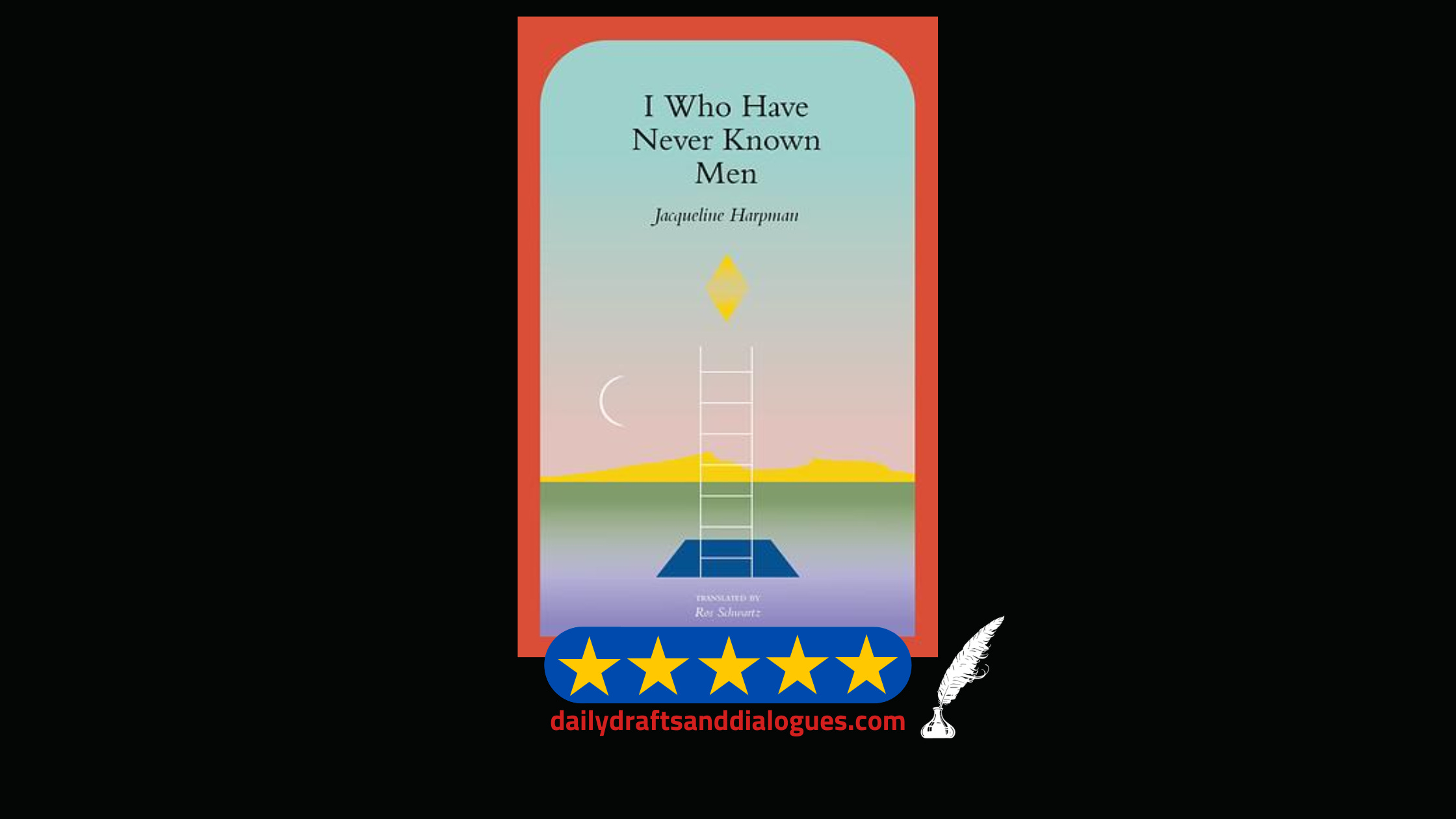
I Who Have Never Known Men by Jacqueline Harpman is a piece of literary fiction that is as mind-bending as it is heartfelt. And it will take you on an introspective journey worth experiencing, if you don’t mind mysterious novels with ambiguous meanings and endings.
The novel begins with the narrator, known as ‘the child’, recounting her memories growing up inside a cage in an underground bunker with thirty-nine other women, all older than her. She recounts how they were constantly monitored by male guards (even when they were relieving themselves) who do not speak to them yet punish them with a whip when they initiate physical contact with one another or fail to follow non-verbal commands. None of the women know or remember how they ended up in the bunker, or why, regardless of the narrator’s efforts to discover the truth.
While the older women remember the world and their lives prior to their confinement, the narrator does not, only understanding what life is like in a cage with the other women under constant surveillance… until the day they are no longer in the cage. On this day, the narrative shifts in a major way, yet doesn’t seem to really change all that much either.
After the women are free from their cage, they still get no closer to understanding who confined them and why, though they do eventually learn that they weren’t the only ones confined. But this knowledge is hardly helpful, as they are offered no explanations or clues to what happened to them or anything about the world in which they find themselves, even finding themselves in a new sort of prison of endless, mostly idle days. It’s as if every question the narrator asks only leads to more questions to ask, up to the very last page of the novel. Questions that are either never answered or could have multiple answers.
As the narrator ages and keeps time with the rhythm of her heart while sharing her story, readers will explore what it means to be human page after page, which is a simple yet difficult concept to fully understand.
Do we know we’re human because we have basic needs and bodily functions and a will to survive? Or is humanity based on the stories we tell, the day-to-day lives we lead, the risks we take, the relationships we make and maintain, what we learn, what we share, what we know, what we believe, what we contribute, or something else? The novel will insist you explore the answers to these questions alongside the narrator, without ever seeming all that dystopic.
While the narrator and the women she survives with experience horrific things, the novel never spirals into apocalyptic language or scenarios, which is compelling and oddly hopeful. Until the very last page, readers will be entranced by the mysterious world of the narrator, never giving up on finding answers, which is ironically more utopic than dystopic in the end.
Overall, I would recommend this novel to readers who appreciate fiction that will make them think about what it means to be human, as well as those readers who enjoy exploring mysterious worlds. Yet please be advised that this novel does contain hard topics entailing extreme isolation, imprisonment, mass death, and suicidal ideation.
Here are some notable passages from the novel:
“I was forced to acknowledge too late, much too late, that I too had loved, that I was capable of suffering, and that I was human after all.”
“Perhaps you never have time when you are alone? You only acquire it by watching it go by in others.”
“Is there a satisfaction in the effort of remembering that provides its own nourishment, and is what one recollects less important than the act of remembering? That is another question that will remain unanswered: I feel as though I am made of nothing else.”
“I cannot mourn for what I have not known.”
“Talking is existing.”
“It is strange that I am dying from a diseased womb, I who have never had periods, I who have never known men.”
“... even a person raised in captivity learns to want, yearns to see beyond their cage. How much of our humanity is intrinsic? How much remains, when all else is stripped away?”
“But I had only known the absurd, and I think that made me profoundly different from them.”
“It is impossible to predict what might happen in a world where you don’t know the rules.”
Have you read this book yet, or plan to read it soon? Leave a comment to start a discussion. Or tell us what we should read next.
© This work is not available for artificial intelligence (AI) training. All Rights Reserved by K.E. Creighton; Creighton’s Compositions LLC.
Want to express your appreciation for this post and writing prompt?
My writing and I are fueled by loyal readers, caffeine, and kind words, so I appreciate any support you can offer that keeps me writing. Thank you so much!
Today’s Writing Prompt
Writing Prompt: Underground Bunker
Write a fictional scene that takes place inside an underground bunker. Or write about what your underground bunker would look like and what you’d have in it.
Writing Tip
Before you begin writing, close your eyes and imagine you are inside an underground bunker. What do you hear, feel, and smell? Are you alone? And why are you there?


