
Notes on Yesteryear
Here are my notes on the first 90 pages of Yesteryear, the Egalitarian Book Club’s June selection. Learn how you can read with us, and don’t forget to check out today’s Community Notes.

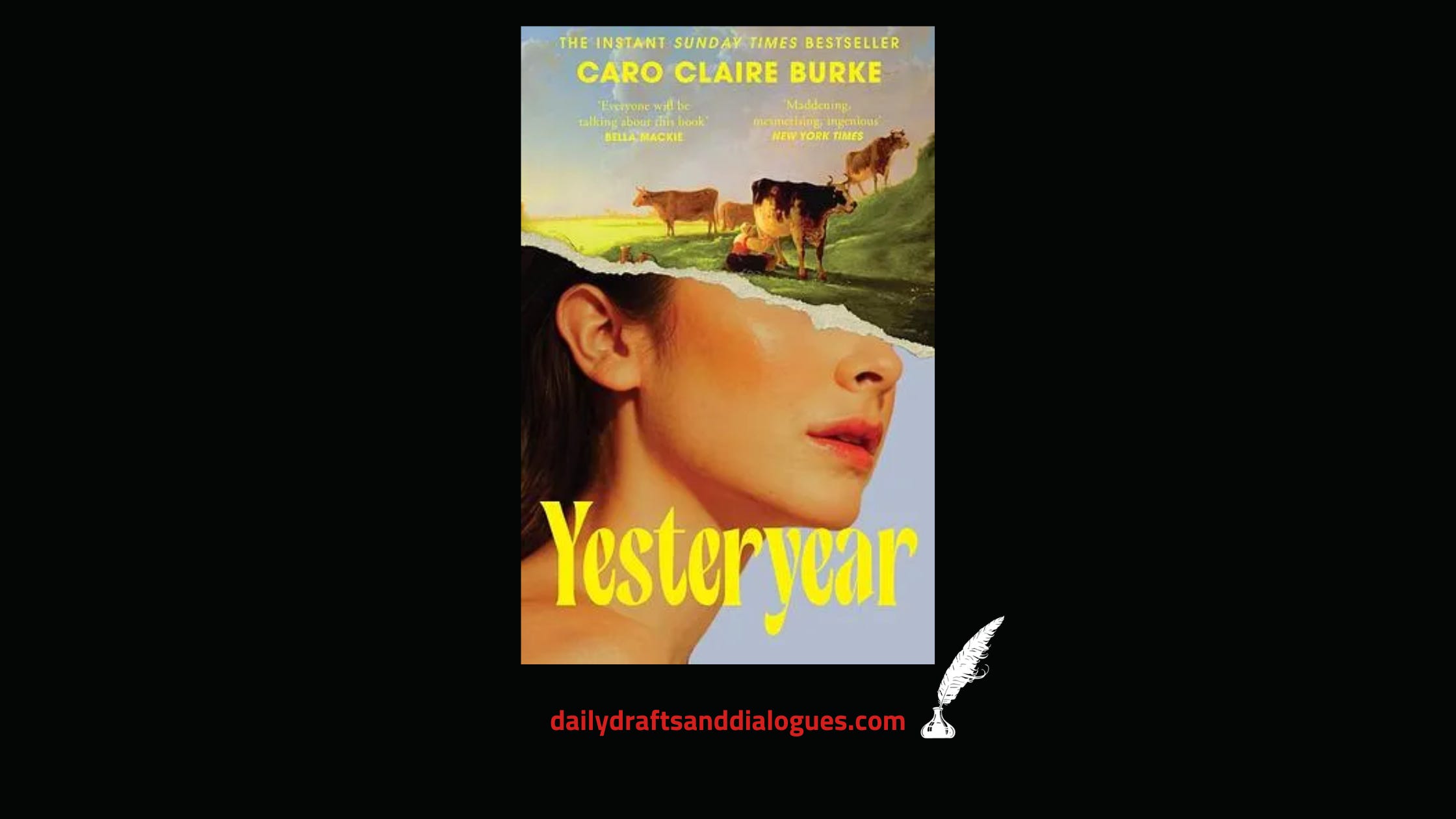
Yesteryear by Caro Claire Burke is one of the buzziest books out this year, and for good reason. It is dripping with satire centered around the growing and controversial tradwife movement. And whether you empathize with or despise its protagonist (who identifies as a tradwife) it’s bound to make you have some sort of reaction, trust me. Which is why I’m hoping it will drive a ton of discussion for the Egalitarian Book Club throughout June. (See the recommended reading schedule in the Community Notes section at the bottom of this post.)
From its first few pages, I could not stop rolling my eyes because, in my opinion, the protagonist, Natalie Heller Mills, is insufferable. As if giving an official interview, she offers a first-person account of her day-to-day life as a tradwife, going on and on and on about how ‘perfect’ (she actually uses that word!) her life is on Yesteryear Ranch, where she lives with her husband, Caleb, and their five children, with another child on the way… and a lot of help.
Though Natalie likes to present herself online as a naturally gifted and beautiful woman and devoted mother who stays at home to look after and educate her children while doing domestic work (like making bread and jam from scratch) to uphold ‘traditional’ values while her husband labors on the ranch, readers learn right away that she and her husband have a lot of help. They have two nannies, a content producer, and ranch hands, as well as modern industrial-grade kitchen equipment, and often shop at chain stores for supplies and food staples. Natalie even admits (to the readers) to outsourcing the products she sells with the ranch’s logo on it from various countries overseas, while at the same time harshly criticizing and judging the women who she perceives as harshly criticizing and judging her— the ‘Angry Women’ who she perceives as being jealous of her and her lifestyle.
Yet despite the picturesque life Natalie describes and tries to curate, it’s clear that there is an underlayer of her personal life and psyche that she does not share on social media, and that in many instances she is performing. She talks about how certain things are good practice for the life she’s supposedly curating, and even tells herself at one point, “Play along, Natalie. Say your lines.” She is also constantly praying to God and reciting Bible verses, though the utterances of the prayers and verses themselves are odd and suspect, constantly blurring the lines between what Natalie is performing and what she truly believes.
At the end of Part I, readers know Natalie resents her husband but are also left guessing what she plans to do next, which will likely involve her former content producer and husband’s political aspirations.
When Natalie wakes up at Yesteryear Ranch in 1855 in Part II, she begins to confront what real ‘traditional’ life on the ranch would entail for her and has a hard time adjusting for obvious reasons. Meanwhile, readers also encounter more of Natalie’s present-day backstory at the beginning of Part II, which glosses over her early life living with a sister and single mother who tells romantic tales of yesteryear pioneers, her religious upbringing, and her early years at college when she meets and marries her husband then falls pregnant.
While we are introduced to a certain intolerable version of Natalie at the beginning of the novel, the Natalie who is performing, I can’t shake the feeling that I am supposed to empathize with her character on some level, even when I don’t want to, especially when she is transported back to 1855 for reasons unknown and when she feels like an outsider in college.
After reading the first 90 pages, however, I am still left wondering how deeply her religious upbringing influenced her and her beliefs and her compulsive need to perform perfection, and whether her present-day husband is as innocent and docile as he is being presented when he clearly has some past indiscretions and is being juxtaposed to the 1855-version of her husband who is violent. I wonder: Is Natalie’s husband essentially the same across centuries? And will her husband’s character end up demonstrating how the monster of misogyny will not die across centuries?
I am anticipating that the remainder of this novel will reveal some of Natalie’s unresolved trauma, once she stops insisting on how ‘perfect’ everything is. But whether she will deal with that trauma in a healthy or unhinged way or double-down in her insistence on a performance of ‘traditional values’ instead remains unclear. I also keep hearing about the major twist at the end of this novel, for which I have scant details, and am looking forward to seeing what it’s all about and am not-so-secretly hoping that it’s a bit unhinged.
I do worry, however, that some readers may not understand this novel’s satirical elements, or the complex layers of its protagonist. And I am also wondering whether the 1855 scenes will enhance or distract from Natalie’s main narrative and character arc, and wonder if this novel will devolve into misogynistic or ‘Angry Woman’ tropes? Either way, I am definitely invested in this ride so far and can’t wait to see what others think! This novel prompts so much to talk about, so let’s chat!
Have you read Yesteryear yet, or want to read it? Share your thoughts in the comments so we can discuss it. No spoilers, please!
© This work is not available for artificial intelligence (AI) training. All Rights Reserved by K.E. Creighton; Creighton’s Compositions LLC.
Want to express your appreciation for this post?
Daily Drafts & Dialogues is fueled by loyal readers, caffeine, and shares with kind words, so any support you can offer to keep it and me going is greatly appreciated. Sincerely, thank you so much! — K.E. Creighton
Community Notes (New!)
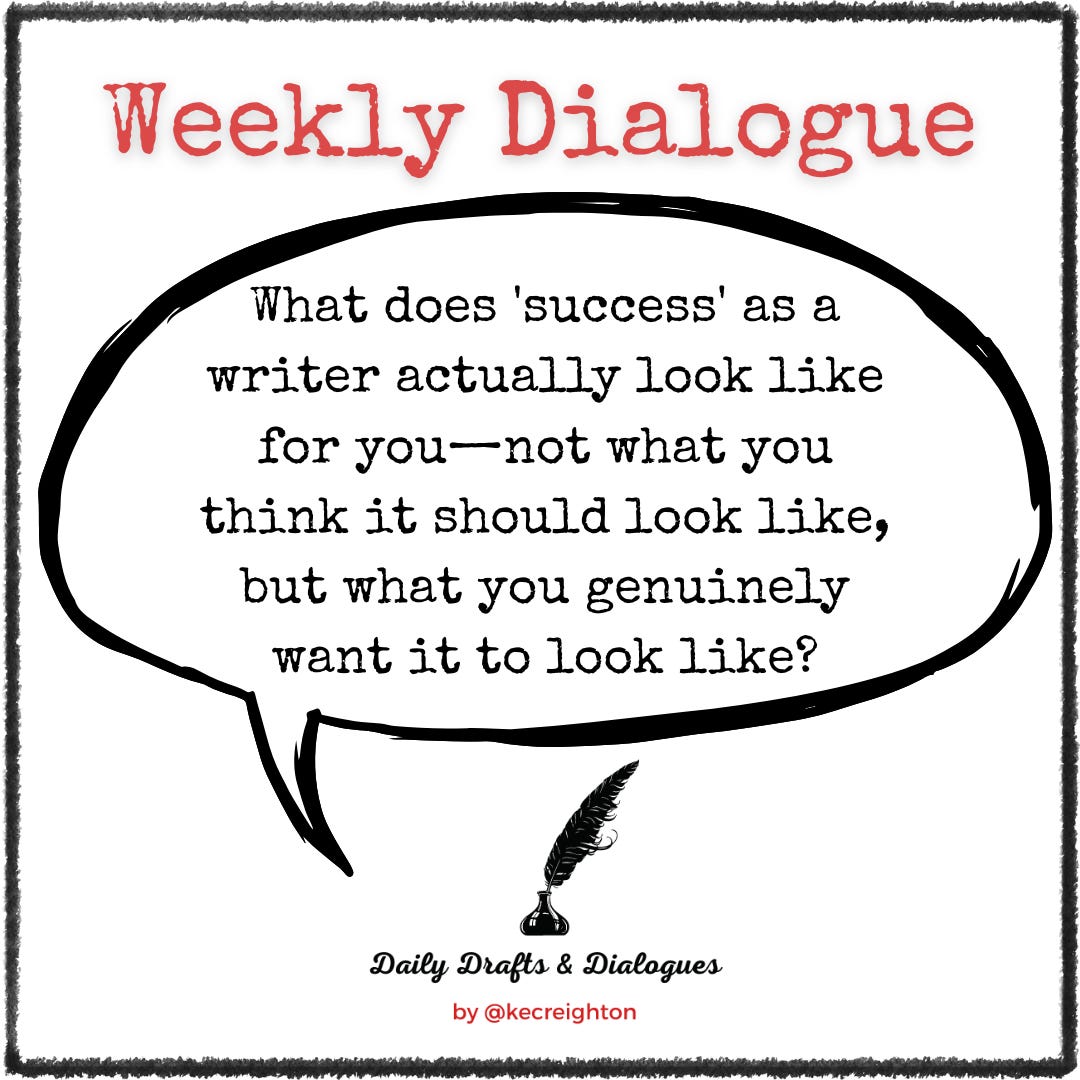
💬This week’s dialogue is up!💬
What does ‘success’ as a writer actually look like for you—not what you think it should look like, but what you genuinely want it to look like? Let’s discuss—all are able to join this public chat thread!
In this new section of Daily Drafts & Dialogues, you will see additional notes on posts and what’s going on in the broader Daily Drafts & Dialogues community, more in depth questions to spur further dialogue, polls, discounts, contest opportunities, helpful links and resources, and opportunities to have your comments and work featured in the new Community Spotlight section below in future posts.
Community Spotlight
This new section will FEATURE YOUR WORK AND VOICES. Leave a thoughtful comment on a Daily Drafts & Dialogues post for a chance to have your writing, links, and profile featured here.
Daily Drafters Features and Exclusives
Check the chat for DAILY WRITING PROMPTS, tips, inspiration, feedback, dialogues, and other exclusive content. And learn how you can get your work and byline featured here in a future post!
NEW
Join the PUBLIC chat thread for Egalitarian Book Club’s May pick: Westward Women by Alice Martin. Warning: Spoilers are allowed in this chat thread since we’ll be using it to discuss the whole book!
For a discuss-as-you-read approach, join the Buddy Read in Storygraph, which will let you see others’ comments as you read the book at your own pace.
Egalitarian Book Club

CURRENTLY READING
Yesteryear by Caro Claire Burke
Week 1 (June 1-7) — Part I and Part II Chapters 1- 11
Week 2 (June 8- 14) — Part II Chapters 12- 27
Week 3 (June 15- 21) — Part II Chapters 28- 42
Week 4 (June 22- 30) — Finish Book
A public chat thread will be shared in Substack to discuss the entire book at the end of the month. Until then, join our Buddy Read in Storygraph to chat about the book as you read it.
JULY BOOK: TBD
A poll will be posted in Storygraph for this book selection soon! Join the club so you’re ready to cast your vote when it goes live.


