
Notes on What We Can Know
What We Can Know by Ian McEwan will make you reflect on the significance of literature and how we talk about it. See my reading notes, then keep scrolling to see today’s writing prompt.

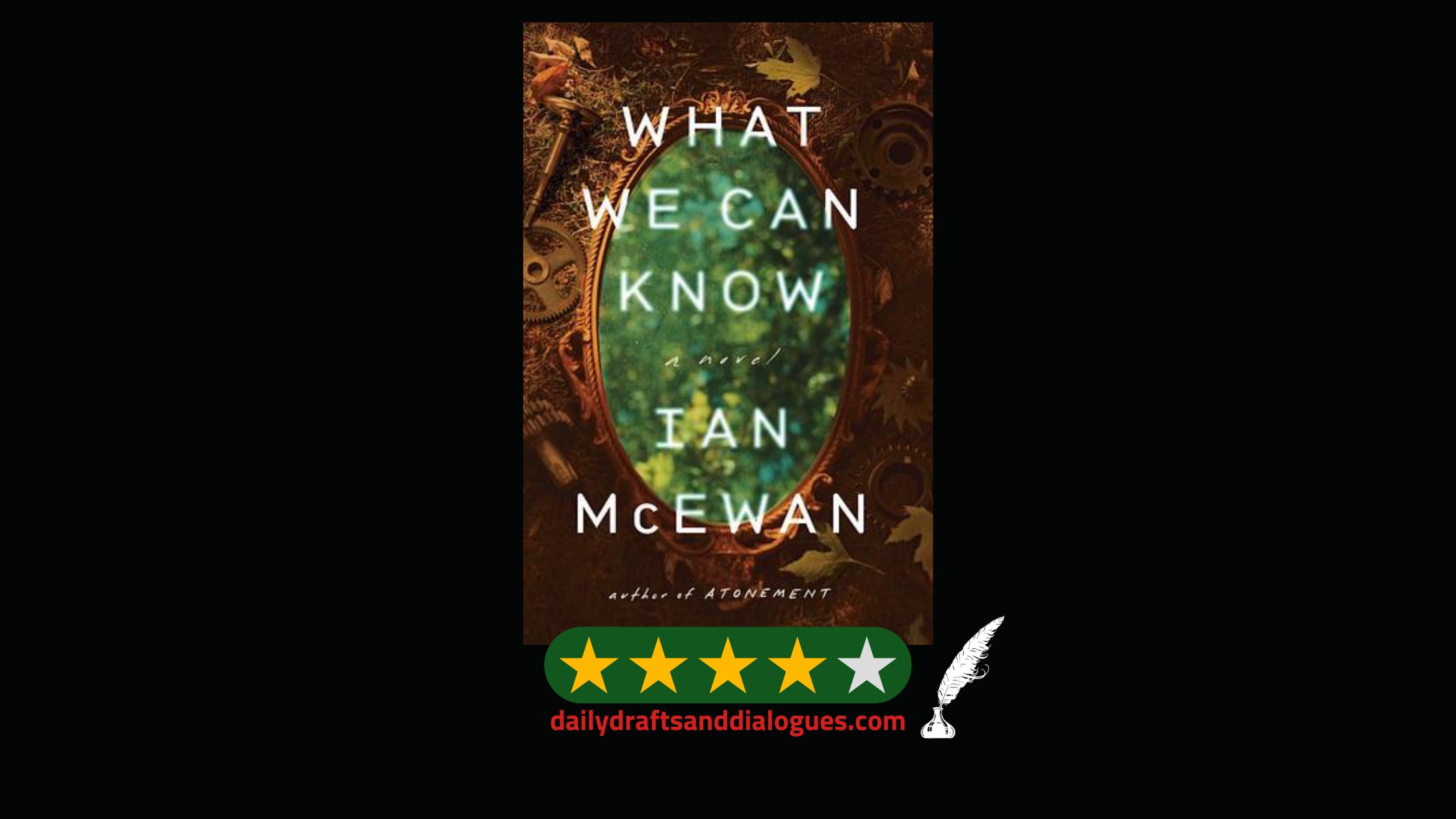
What We Can Know by Ian McEwan is an interesting piece of fiction that literary aficionados will enjoy, as it explores the nature of what we can ever truly know about the stories people write and tell, including the stories told about those people and their stories long after they leave this world. It also includes plenty of metafictional elements that are interesting to unpack.
While the first part of the novel takes place one hundred years in the future, it seems more realistic and relatable than the second part of the novel in a lot of ways. As readers join the protagonist in his quest to find the long-lost poem ‘A Corona for Vivien,’ written by once highly regarded poet, Francis Blundy, they’ll learn everything he knows or thinks he knows about the poem, including the lore surrounding it. And in this sense, the discovered correspondence and gossip and flattering articles written about the poem over the years— a poem which no longer exists in any written or digital or physical form— takes on a life and significance of its own outside of the poem itself, for both readers and protagonist.
As the novel continues, readers’ frustration may continue to grow as they begin to realize that the protagonist is likely pursuing nothing more than an apparition (or story) of a poem. A poem that wasn’t even substantial enough for its one and only audience (excluding one of its members) to remember in earnest when it was originally recited a hundred years prior, as even they seemed only to recall bits and pieces of its content and significance. Nevertheless, once invested in the lore of the poem and what it supposedly symbolized and expressed personally, universally, and literarily (adverbs used intentionally here *wink*) readers will find it impossible to give up on its discovery as the protagonist continues his quest.
The mystery of the missing poem’s location, fate, and lore come to a head in the second half of the novel via Vivien’s discovered journal, in which she reveals what happened to the only copy of ‘A Corona for Vivien’ poem and why. Yet she still has her own story to tell about it and her own legacy, which carries as much weight as it does doubt, leaving readers of the novel wondering who they should trust in the end and why, as well as the significance of the stories they tell about famous pieces of literature and why they matter, especially when they include famous authors.
This novel prompts scads of questions regarding literature, such as: What matters most when trying to understand literature— the language inside the works themselves, their authors or subjects, their original or later audiences, their ‘timeless’ qualities, their reputations, or the stories we tell about them? And whose accounts and analyses regarding famous works should we trust most, and why? And so on.
Overall, the novel was effective in eliciting profound reflection regarding the short and long-term values and essences of literature, and I deeply sympathized with the protagonist’s quest to see and read the original ‘A Corona for Vivien’ poem. Who wouldn’t want to read the original poem after learning everything he had about it, or the gossip surrounding it anyway?
At the same time, however, I found the main characters, including the protagonist, to be too similar to one another— all of them were a bit one-dimensional and juvenile, even sex-obsessed and synthetically cold most of the time— a repetitive and superficial simulacrum in a way. And this made it difficult to relate to or even care about their fates and what they did, because they seemed more like caricatures than complex, distinct individuals or characters. Perhaps this was intentional, as literature makes caricatures of us all, as both readers and writers? Though I’m not sure.
If you enjoy novels that attempt to unpack the meaning and value of literature, you won’t want to miss this one. I would highly recommend it for book clubs.
Here are some notable passages from the novel:
“It was expressed by one critic, a contemporary of Francis, who, writing about the popularity of literary biographies, regretted a trend towards a fascination with the life but not the work. The affairs and penury in the lives of poets, the drunken lost weekends, professional jealousies, status anxieties and crises of self-doubt relieve a wider readership from engaging with the poetry.”
“The humanities are always in crisis. I no longer believe this is an institutional matter – it’s in the nature of intellectual life, or of thought itself. Thinking is always in crisis.”
“A literary work, like a small child, may take a long time to achieve a fully independent life. Or it might have no life at all.”
“This longing for what was never known and is lost needs its word, something beyond nostalgia, which pines for what was once known. It’s not quite an affliction, but nor is it a resource. That pleasure-pain is emotionally disruptive, it wrecks concentration.”
“But to return to Blundy’s Corona and its journey towards an independent life; the long-term goal is to discern the difference, the chasm that divides the poem as it really was from what it became in the culture. A hopeless task, perhaps.”
“Memory is a sponge. It soaks up material from other times, other places and leaks it all over the moment in question. Its unreliability was one of the discoveries of twentieth-century psychology. That did not stop people from relying on their own or from believing in the recollections of others, if it suited.”
“The Corona was more beautiful for not being known. Like the play of light and shadow on the walls of Plato’s cave, it presented to posterity the pure form, the ideal of all poetry. Any upstart version was a relegation to the abject humdrum real.”
Have you read this book yet, or plan to read it soon? Leave a comment to start a discussion. Or tell us what we should read next.
© This work is not available for artificial intelligence (AI) training. All Rights Reserved by K.E. Creighton; Creighton’s Compositions LLC.
Want to express your appreciation for this post and writing prompt?
My writing and I are fueled by loyal readers, caffeine, and kind words, so I appreciate any support you can offer that keeps me writing. Thank you so much!
Today’s Writing Prompt
Writing Prompt: Book Titles from 2126
Write fifteen to twenty book titles that might exist in the year 2126, fiction or nonfiction, real or made-up genres, with or without blurbs.
Writing Tip
To get inspiration for this prompt, consider the books you enjoy reading and why, as well as the books and stories you wish existed. You should also browse your bookshelves and TBR stacks for ideas.


